



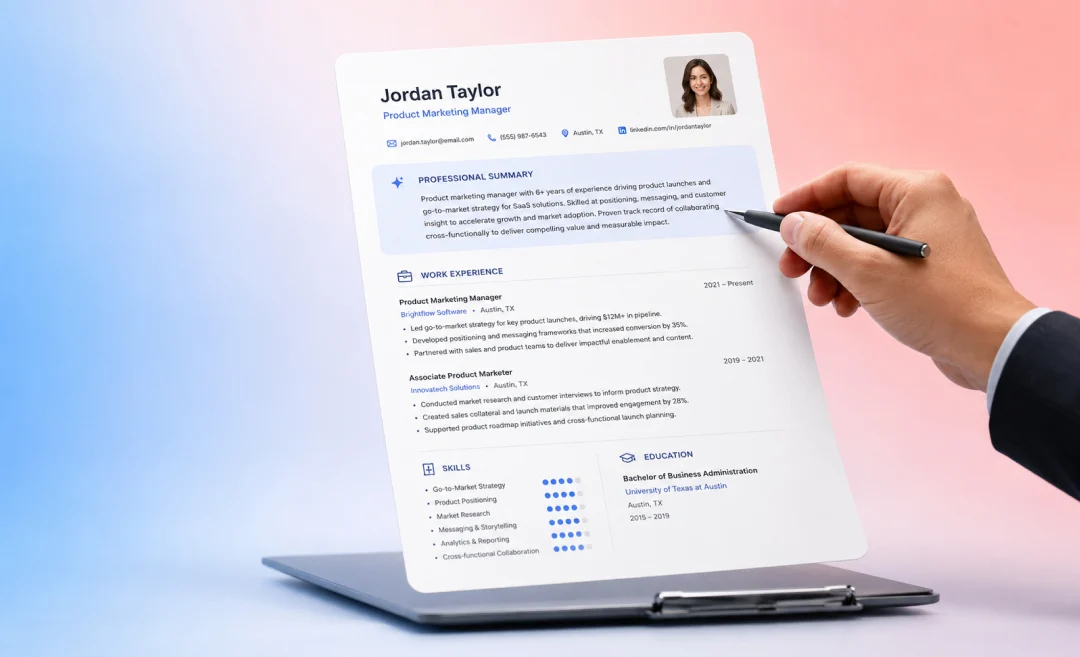



A resume summary is a short statement at the top of your resume that explains your experience, skills, and value for a job. It helps hiring managers understand who you are and what you bring before they read the rest of your resume. If you are wondering what a resume summary is and how to write a resume summary this guide breaks it down for you.
A strong resume summary can make your resume easier to scan for recruiters and help you stand out. It will make your resume more relevant to the role you want. It can also help you highlight important skills and keywords near the top of the page. In this article, you will learn what a summary on a resume is, what to put in a resume summary, how long it should be, and how to write one well.

What is a resume summary
A resume summary, also called a professional summary, is a short introduction that you place near the top of a resume. It gives recruiters a quick overview of your background, strongest skills, and most relevant experience. According to Indeed, a resume summary is usually two to three sentences long and helps employers quickly see your qualifications.
This section you add to your resume is different from the work experience section because it does not list every job you had and every responsibility. Instead, it summarizes the most important information regarding your work experience in one place. A good resume summary is meant to tell the employer why you are a strong match for the role.
If you want to improve how you condense important ideas, start with learning how to make a summary.
Do resumes need a summary
A resume does not always need a summary section. In many cases, it is entirely optional. Still, a resume summary is a helpful thing to include when you have a lot work experience and a specialized set of skills, or if you are applying for a sepcific role and you want to show that you are a good fit right away.
A resume summary is most useful if:
- You have several years of work experience
- You are changing careers and need to highlight your transferable skills
- You want to highlight certain achievements or job-specific strengths
According to Yale School of Management, a resume summary is especially useful for professionals because it helps condense relevant experience and it gives recruiters a way to quickly understand the candidate’s fit for the role they applied for.
If you have very limited work experience, you may choose to use the summary section on your resume to talk more about your education, projects you worked on, or certain skills instead. The key is to use the space in the way that adds the most value to your resume.

Should a resume have a summary
A resume should have a summary if that section makes your value in the context of the job application clearer. It is not required for every person and for every role, but it can be a strong addition to your resume when done well.
Ask yourself these questions if you can’t decide what to include in your summary section:
- How can this summary help explain why I fit this role?
- How can it highlight strengths that may not be obvious right away?
- How can I include useful keywords in a natural way from the job description?
A summary section is worth adding when you can answer these questions well. Avoid using this section to stuff it with repetitive information and keywords. If you are working on writing your resume or a cover letter, it may also help to read this article on objective summaries, which explains how summaries work in different contexts.
What should a resume summary include
A resume summary, when written well, includes only the most relevant details to your experience and application. It should be short, specific, and, as much as possible, focused on the role you want.
Most resume summaries should include:
- Your current title or profession
- Your years of relevant experience
- Two or three important skills
- Measurable results
- Language that matches the job posting as long as it fits your real background
The resume summary section should not try to tell your whole story. It should give the recruiter a reason to keep reading.
To write a sharp summary, you first need to know which ideas matter most. This guide on how to identify key points can help you choose what to include and what to cut.
How long should a resume summary be
A resume summary is usually two to three sentences long. In most cases, that means roughly 30 to 80 words. Keep the section brief so employers can read it quickly and understand your background and fit right away.
If your summary is too long, it starts to lose its purpose. Hiring managers often scan resumes very quickly, so a short resume summary is more useful than a long one.
A general rule of thumb:
- Make it concise
- Make every sentence useful
- Cut anything that is not relevant
How to write a summary section for your resume
When you are unsure how to write a summary for your resume, the best approach is to write the rest of your resume first. That makes it easier to see your strongest points and decide what belongs at the top. After all, a summary is basically a condensed version of the larger whole.

Here is a simple step-by-step process for writing a good summary for your resume:
1. Read the job description carefully
Look at the job title, required skills, and what words they use. Pay attention to the tools and technical knowledge needed, and the job responsibilities. Think of the qualifications that show up more than once. These will be important to highlight.
This helps you understand what the company you are applying to cares about most. It also helps you use the right keywords in a natural way.
2. Choose your top qualifications
Pick qualifications and information that are the most relevant for the role you are applying for. What you include needs to show that you are the strongest match. Information you might include:
- Years of experience
- Industry knowledge
- Technical skills
- Leadership experience
- Certifications
- Key achievements
Keep the focus while writing on what matters most for this specific job, not everything you have ever done.
3. Start with your professional identity
Your first few words should tell the employer who you are professionally. For example, you might lead with your current title, field, or level of experience within the field.
This gives the reader context right away and makes the summary (and the rest of your resume) easier to understand.
4. Add skills and proof
After your opening sentence that tells us who you are, include two or three relevant skills and one “sign of impact.” If possible, you should use measurable results or any other numerical data, but don’t overdo it.
You can include revenue growth, time saved, calls handled. Or you can include team size, sales performance, completion rate, or customer outcomes.
These details make your claims more convincing.
5. Tailor the summary for each role
Do not use the same resume summary for every job. Small changes can make a big difference. Change your title, skills, and keywords based on the job posting.
Keywords are especially important if an employer uses ATS software to scan resumes, but it is important not to overdo it. Stuffing your resume with keywords can come across wrong.

Common resume summary mistakes
Besides overstuffing their resume with keywords, there are a few other mistakes people often make.
For example, make sure that your resume summary is not too vague or too broad. A summary section can actually hurt your resume if it says very little in too many words.
Other common mistakes include:
- Making the summary too long
- Using generic phrases
- Not including proof
- Not tailoring the summary to the job
- Listing generic, unrelated skills
- Not having a clear focus
A good test for your resume summary is simple: if your summary could fit almost anyone, it is too generic. The best way to avoid these mistakes is to write your resume first, then go back and create the summary section.
A professional summary is not always needed on a resume, but it can be very useful for landing the job you want. It can help you highlight your strengths and recruiters will thank you for making their job easier.
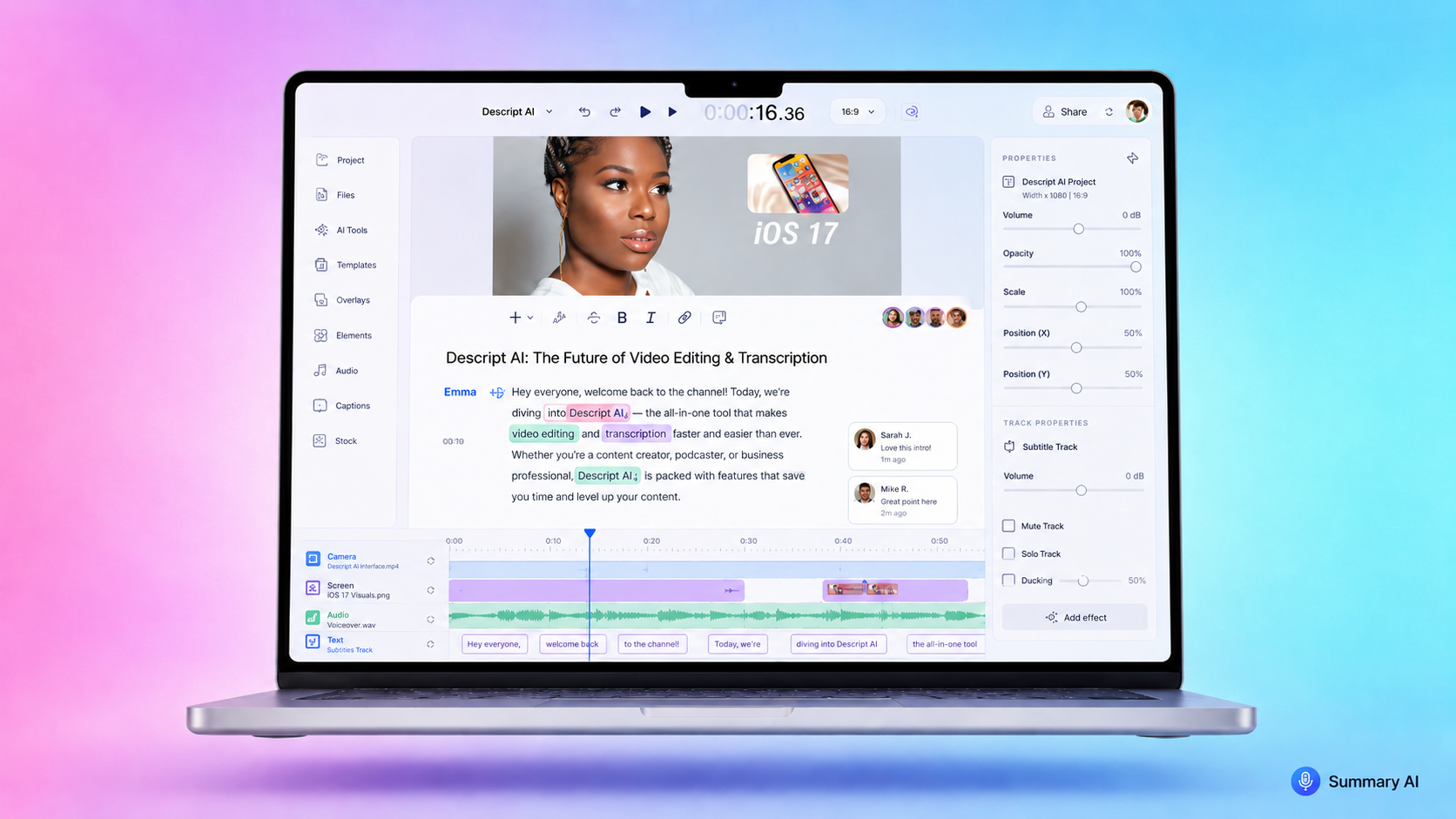
Summarize your meetings in seconds with AI
Until you land your dream job, you are bound to have hours of meetings every week. Summary AI has a useful tool for people who have too many meetings that they just can’t keep up with. It allows you to summarize your meetings with AI. The tool joins your calls, transcribes every word with speaker tags, then creates a perfect summary with key points and action items that you can email to your colleagues. Summary AI is the perfect AI note taker for every situation. That way everyone is always on the same page regarding what was discussed at the meeting. It can even be useful for recruiters during job interviews!