

Choosing the best AI detector is becoming just as important as choosing the right AI tool. As more content is written, translated, and rewritten with artificial intelligence, schools, publishers, agencies, and brands all want a quick way to check how much of a text might be machine generated.
The challenge is that the detection of AI content is not easy and the tools to do it are never perfect. Each AI detector produces results that can be inaccurate with many false positives.
In this article, you will give you an overview of the top 10 AI detectors. Use this list to pick a tool that supports your workflow instead of slowing it down.
What you need to know about AI detectors
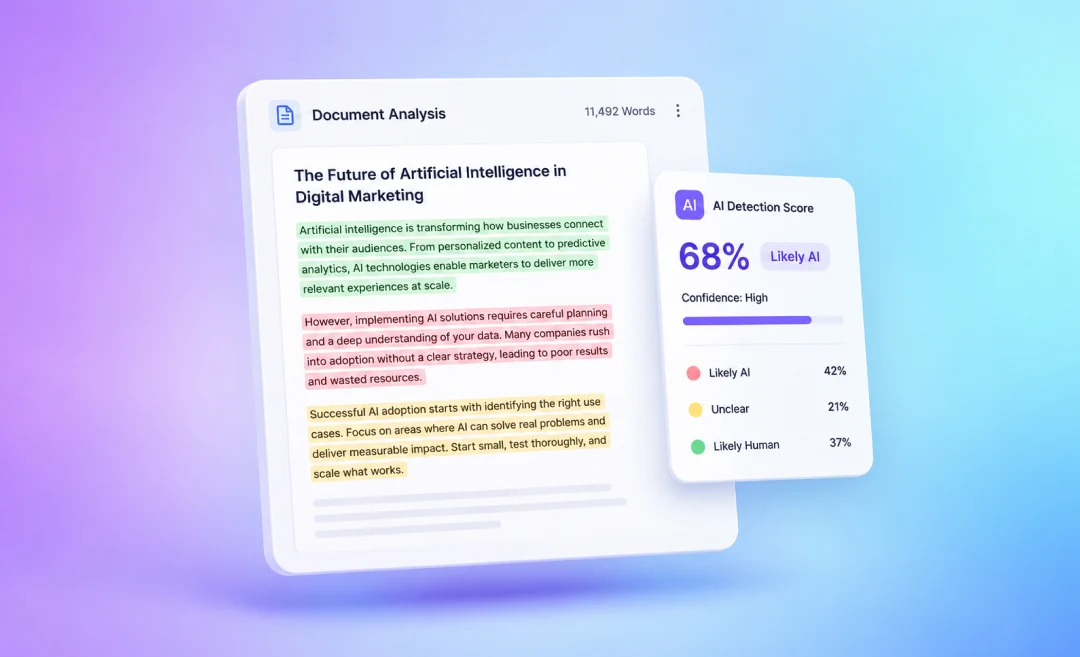
An AI detector is a tool that looks at text and guesses if a human or an AI wrote it. It does this by looking at different patterns in words, sentences, and how the text is put together. You usually paste or upload text into the tool, then it gives a result such as “likely AI-written,” or “likely human-written,” or shows that the text is a mix of both. Different tools use different methods, so the same text can get different results.
Who uses AI detectors?
AI detectors are popular today because AI-written text is now common all around us.
Teachers may want to check if a student wrote an essay alone. Editors may want to check who wrote an article. Companies may want their content to sound human when they speak to customers. Without some kind of check, it is hard to keep rules about who wrote what and how AI is used.
AI detectors can make mistakes
AI detection is not perfect. Sometimes a tool can say human text is AI-written or vice versa. This can cause trouble in places like schools and universities where AI detection is taken seriously to avoid cheating on exams.
A tool can also miss AI text that has been edited or changed to look more human. Because of this, AI detectors work best as a guide, not as a final judge of whether something is AI-generated or written by a human. Used correctly, they can point to text that needs a closer look and support your rules about when and how AI tools are allowed.
AI can be very useful when used correctly. For people who have a lot of meetings, Summary AI can help save many hours of time each week. It joins your calls, transcribes with AI, and creates a perfect summary each time. That way you can focus on taking part in the meeting instead of taking meeting notes.
Top 10 AI detectors
Here are the top AI detectors you can choose from with a very brief overview of each with pros, cons, and the monthly subscription price when available.
1. GPTZero
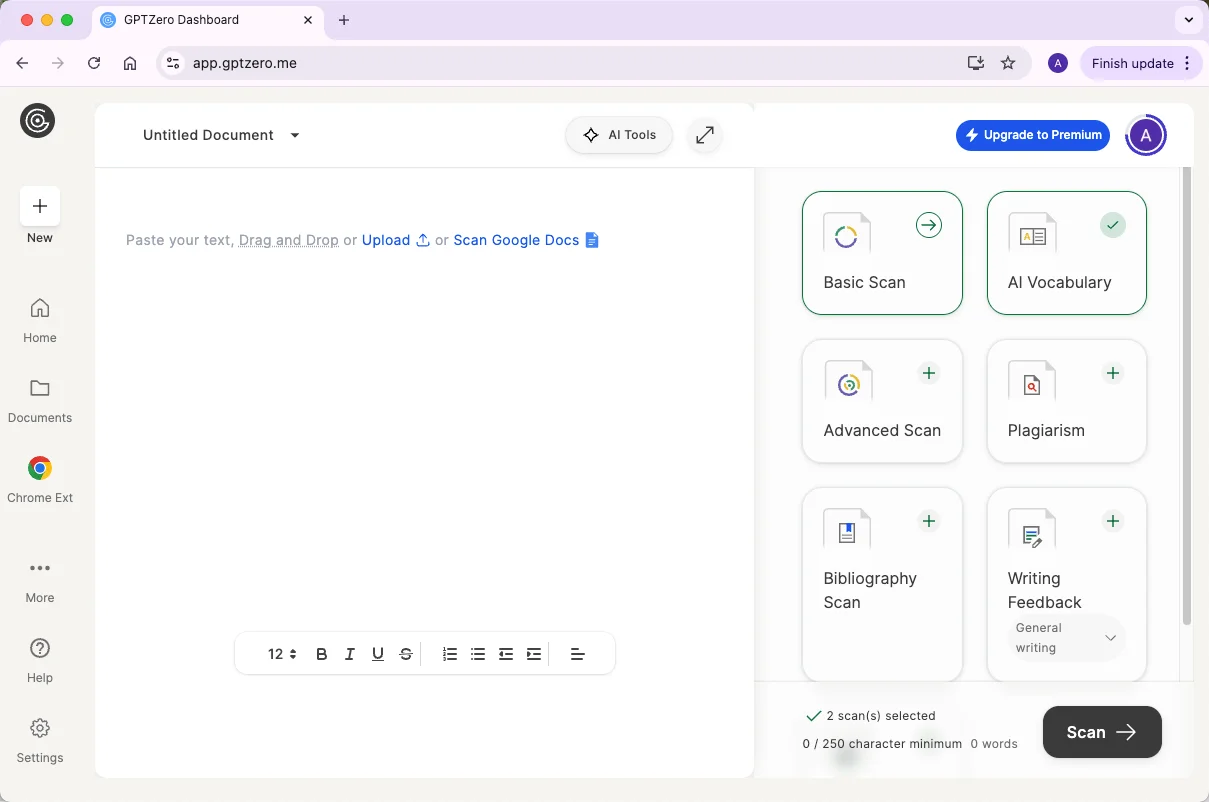
GPTZero checks if text is AI written and gives a score for each part of the text.
Pros
- Easy to use for quick checks.
- Has a free plan with a word limit.
- Shows sentence level scores.
Cons
- Results can change with different writing styles.
- Can miss edited AI text.
Price
Starts from $14.99 per month.
2. Originality AI
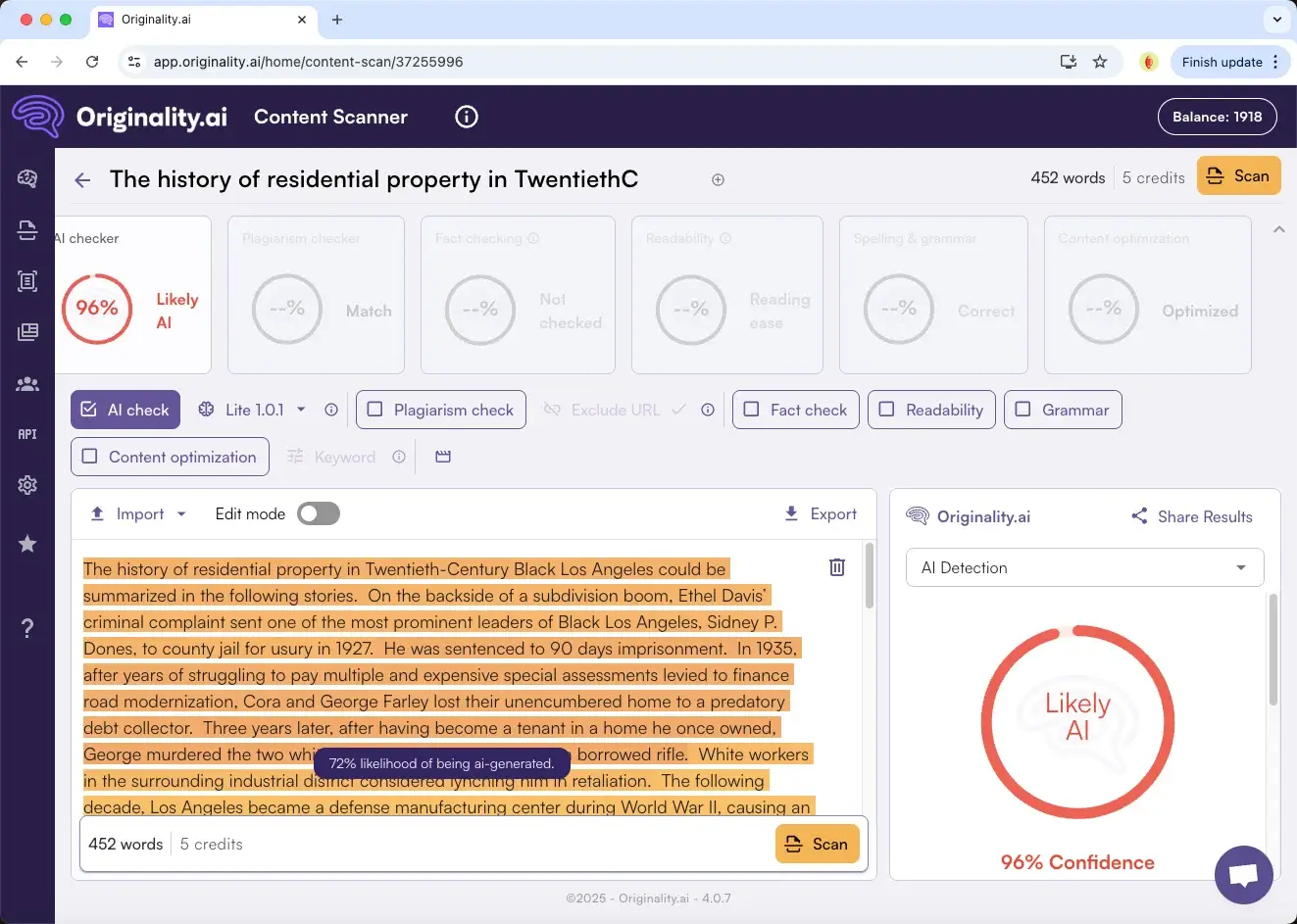
Originality AI checks for AI text and plagiarism in one scan and uses a credit system.
Pros
- Good for bulk checks of long text.
- Works with teams and has API access.
- Shows clear reports for audits.
Cons
- Known to flag some human text as AI.
- Full use needs a paid account.
Price
Starts from $14.95 per month dollars with 2,000 credits.
3. Winston AI
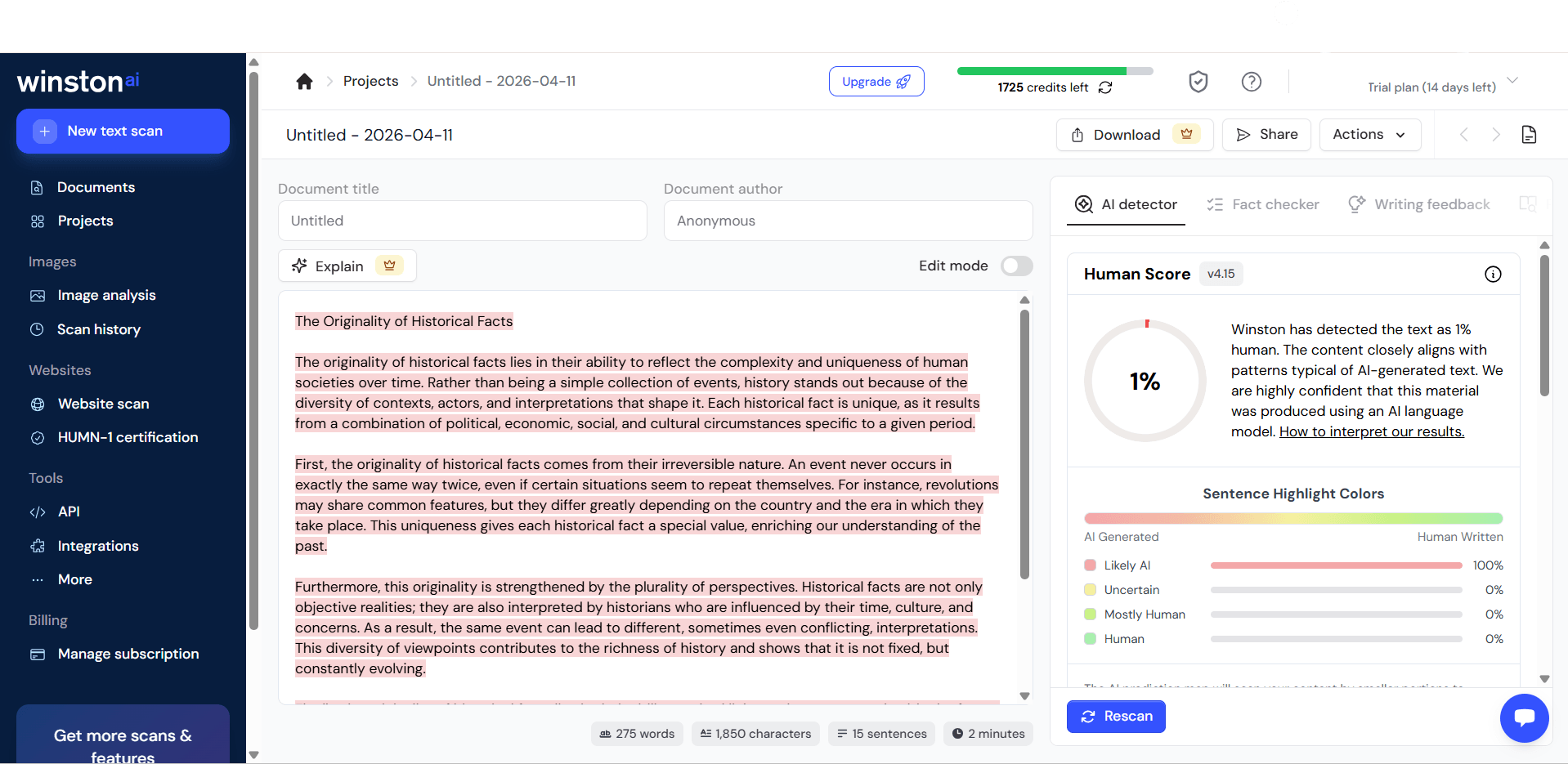
Winston AI checks text and images for AI use and also offers plagiarism checks.
Pros
- Handles essays and long pieces well.
- Low rate of false flags in some tests.
- Shows clear AI versus human breakdowns.
Cons
- Free trial is short and limited.
- Uses a credit system.
Price
Starts from plan from $18 per month with 80,000 word credits.
4. Copyleaks AI Detector
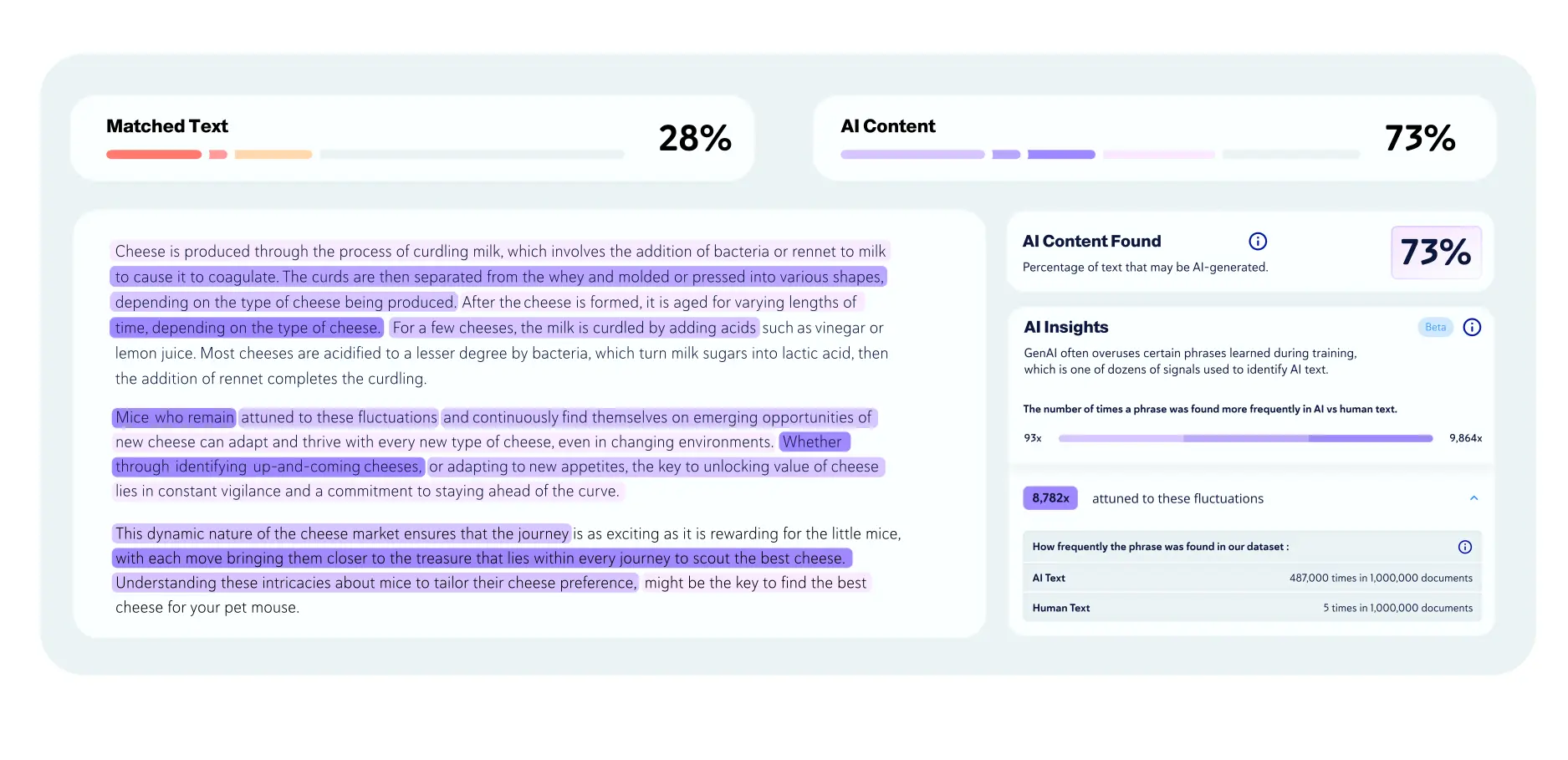
Copyleaks offers AI detection and plagiarism checks for many languages using a credit based model.
Pros
- Works in more than one language.
- Good for schools and companies that need reports.
- Can scan for AI and plagiarism in one pass.
Cons
- Can flag structured or formal text as AI.
- Credit packs and plans can seem complicated.
Price
Starts from $16.99 per month for 100 credits on the monthly plan.
5. Turnitin (with AI detection)
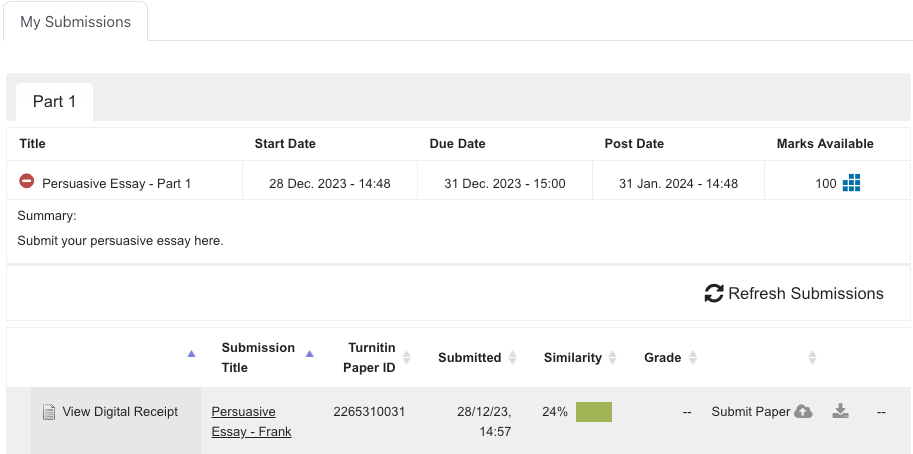
Turnitin is known for plagiarism checks and now also includes AI detection in its offers.
Pros
- Many schools already use it.
- Fits into existing classroom scenarios.
- Gives reports for AI and plagiarism.
Cons
- Aimed at institutions, not individual users.
- Limited detail on how the AI score is set.
Price
Quote needed.
6. Sapling AI Detector
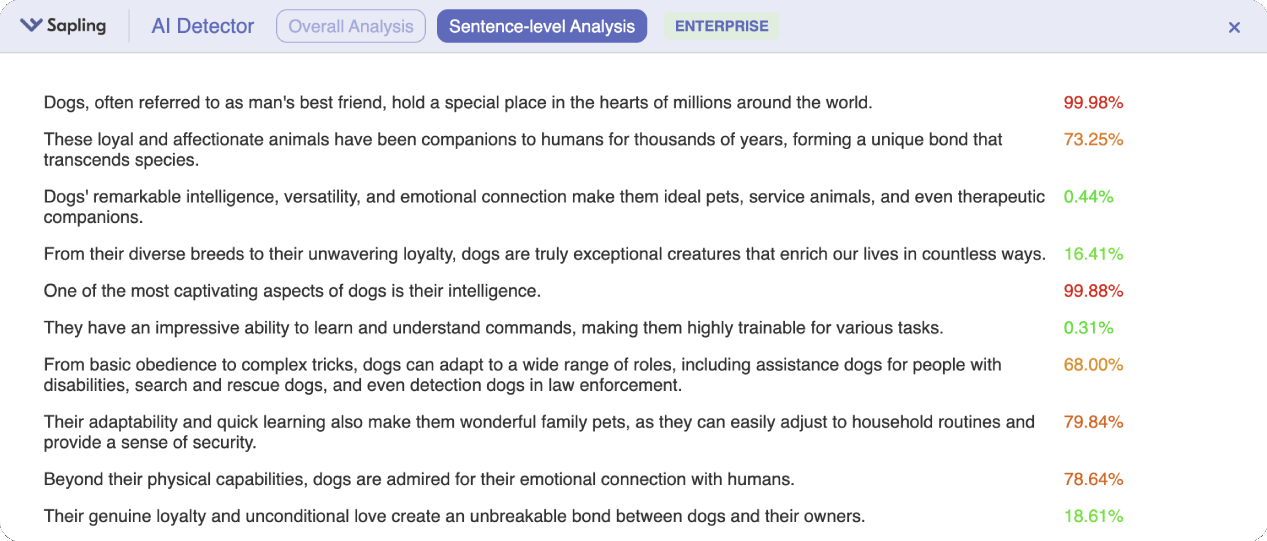
Sapling offers an AI detector as part of its writing tools and grammar tools.
Pros
- Works inside some business tools and workflows.
- Can support checks across teams.
- Useful as a second opinion tool.
Cons
- Pricing is tied to wider Sapling plans and credits.
- Detection best for support, not main use.
Price
Starts at $25 per month.
7. Proofademic AI
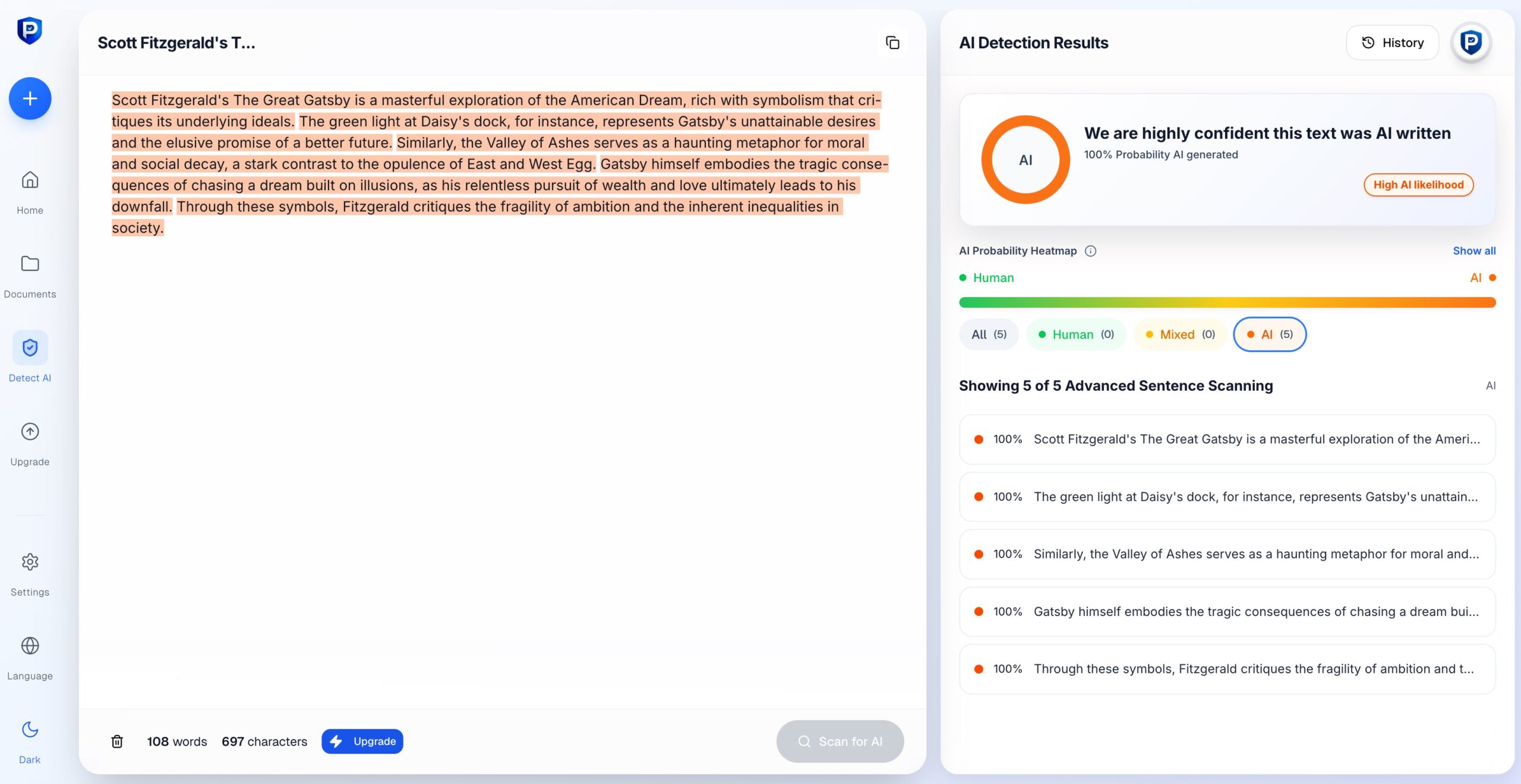
Proofademic AI focuses on academic text and student essays.
Pros
- Good fit for academic style work and citations.
- Low false positive rate in some user tests.
- Flags risky phrases without changing the whole text.
Cons
- Seen as strict, which can feel heavy for casual use.
- No public simple pricing page in some regions.
Price
Starts at $15 per month.
8. Walter Writes AI detector
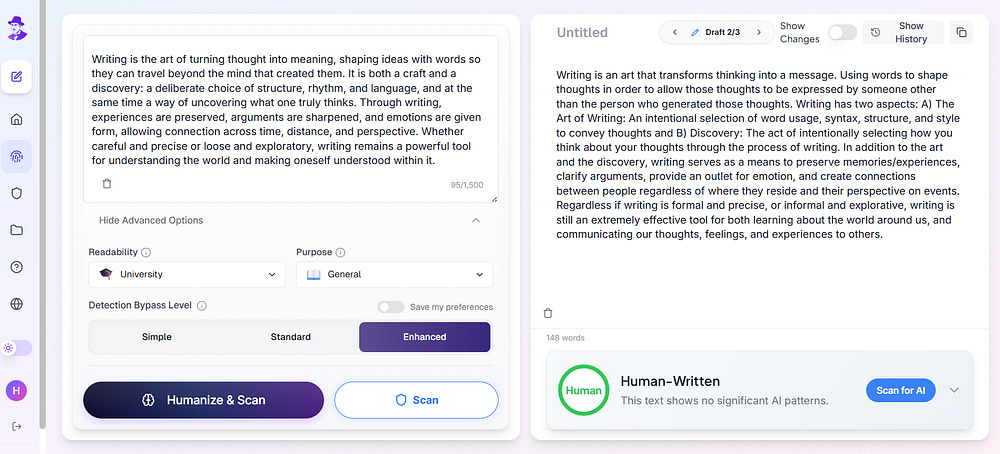
Walter Writes AI includes AI detection inside a humanizing and editing tool.
Pros
- Lets users see risky sentences and adjust them.
- Performs well against some rival tools in user tests.
- Helps keep structure while reducing AI style risk.
Cons
- Focus is on detection plus rewrite, not pure detection only.
- Pricing and limits depend on full product plans.
Price
Starts at $10 per month.
9. Writer AI Content Detector
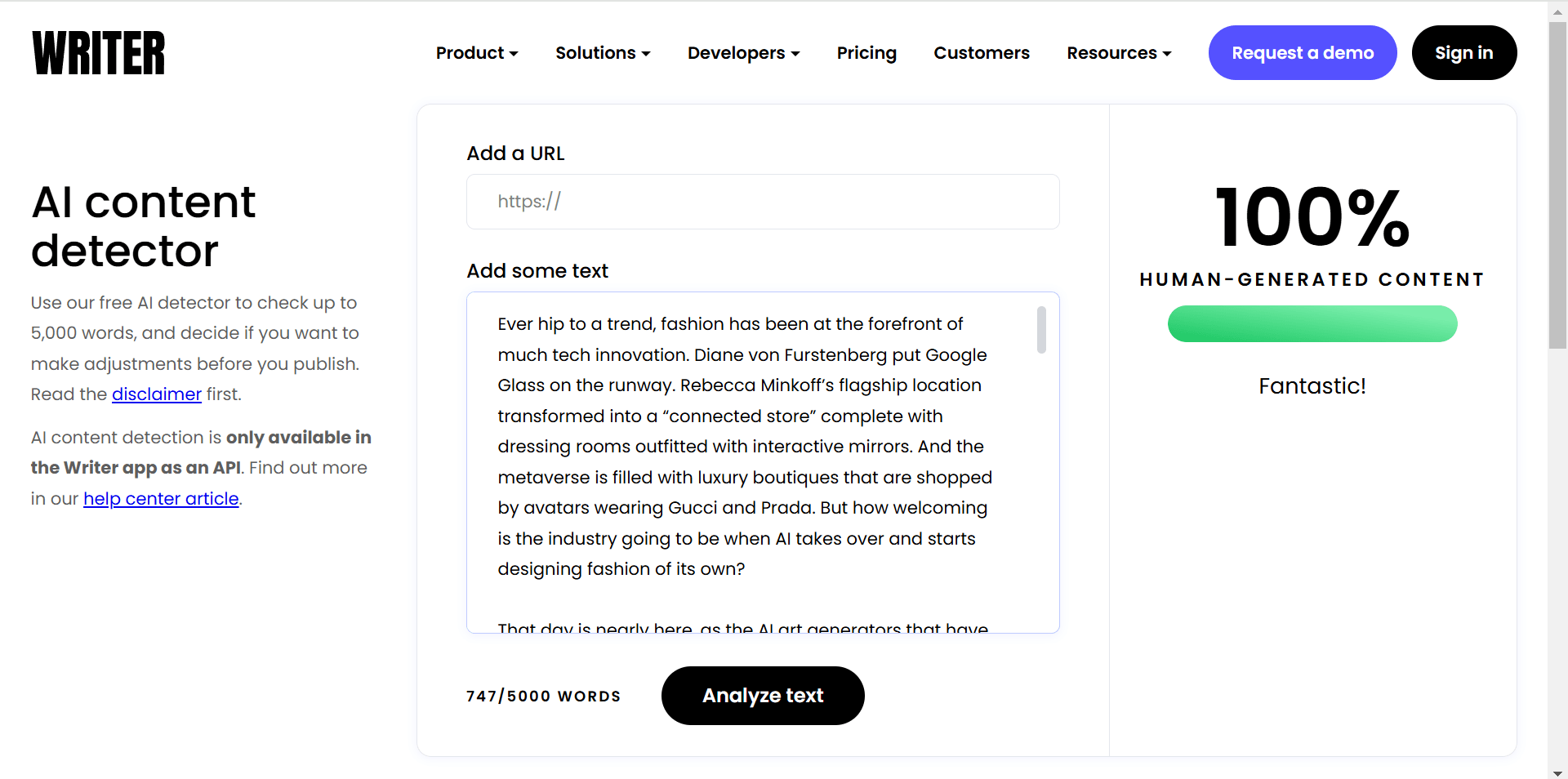
Writer offers an AI content detector as part of its writing platform for teams.
Pros
- Handy for a quick first scan of text.
- Fits into brand writing and style workflows.
- Has team features for business use.
Cons
- Reports are lighter than some stand alone tools.
- Works best if you already use the wider Writer platform.
Price
Starts from $18 per user per month.
10. Quillbot AI Detector
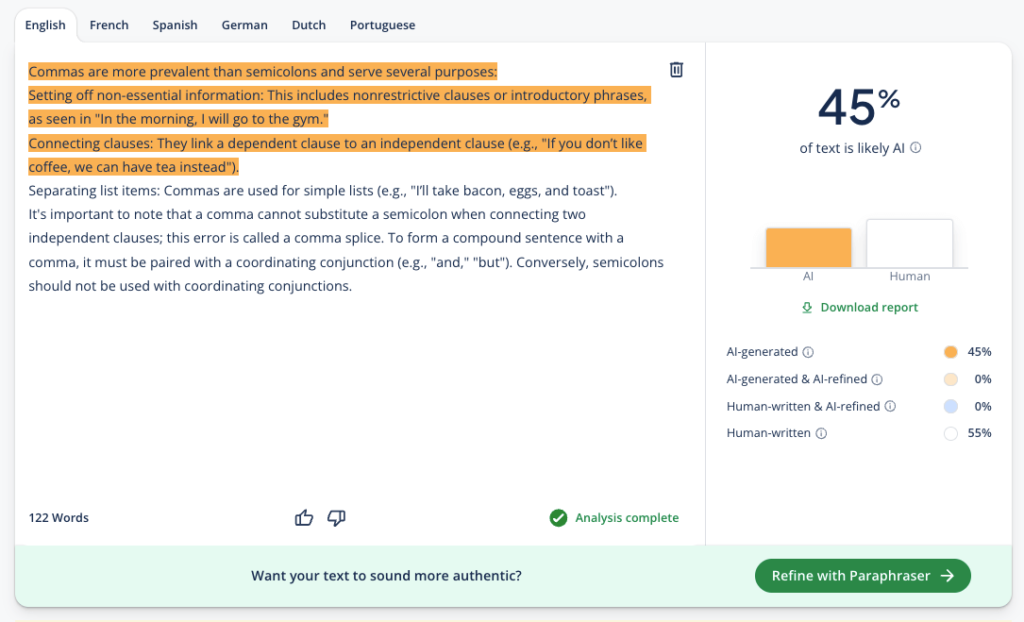
Quillbot offers an AI detector to go with its paraphrasing tool.
Pros
- Simple to try for short checks.
- Fits with paraphrasing and grammar tools many students already use.
- Web based and easy to open in a browser.
Cons
- Not seen as the strongest tool in some tests.
- Works best on longer text, not very short samples.
Price
Starts at $19.95 per month.
How to choose the best AI detector
To choose the best AI detector, first ask what you need it for. A teacher checking student work, a publisher checking articles, and a business checking marketing text can need different things.
Accuracy is important, but no AI detector is perfect. It helps to use tools that show clear reasons for their result instead of only a single score. These tools can show why a text may look AI written, but they should not be used as final proof.
It can also help to think about extra needs like plagiarism checks, team access, document uploads, technical access through an API, or support for more than one language. These things matter more if you check a lot of text.
For important choices, treat AI detection as one signal and always add human review. The best AI detector is not only the one with the highest score. It is the one that fits your use case, shows clear evidence, and supports a fair choice.
Make use of AI the right way
AI tools can help with many parts of your work if you use them well. For text, AI detectors can act as one check among others. For meetings, tools like Summary AI can turn long calls into clear notes, which frees time for real work instead of manual writing.
Summary AI can help people who have many meetings each week. It can join calls, record them, and turn speech into text with AI transcription and generate short summaries. That way you can stay focused in the conversation while the tool handles the notes and follow up points in the background.