


As a musician, if you’ve ever wished a computer could listen to a song and turn it into sheet music, you’ve probably wondered: is there AI that can transcribe music? Nowadays, thanks to AI, there are tools for everything, including music notation. In this article we will talk about AI software that can convert audio into music notes, piano sheet music, and MIDI. It helps to also understand what these tools actually do, where they work well, and how they’re different from audio‑to‑text transcription tools like Summary AI.
What AI can transcribe music?
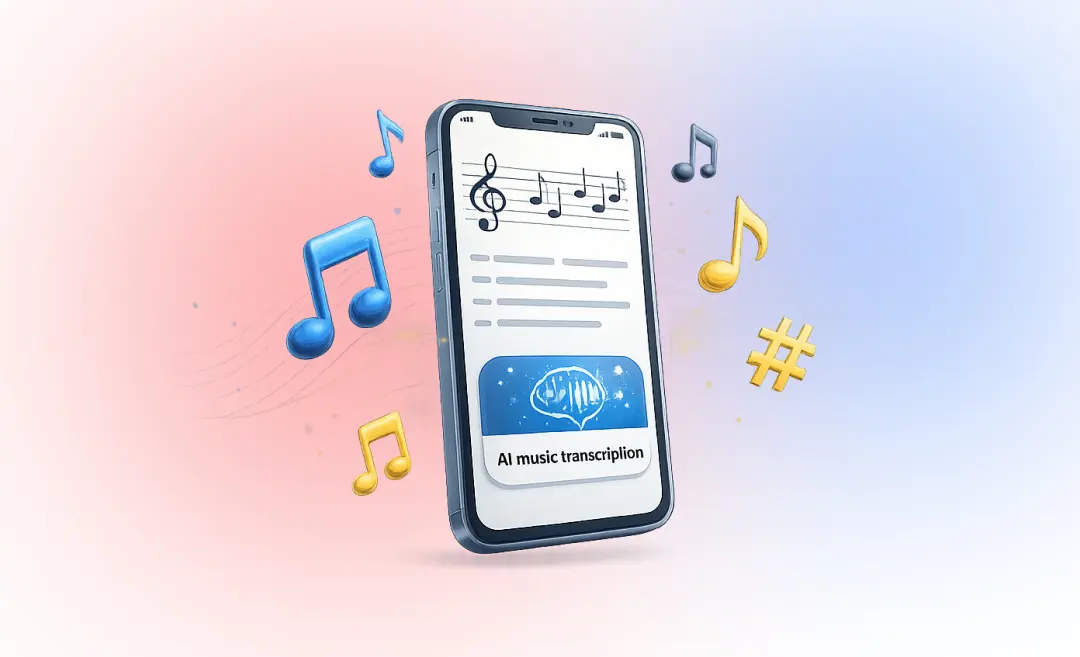
There are AI tools (even free AI apps) for everything. There are even tools that can transcribe music from audio. These tools take a sound recording, analyze, and try to write it down as music notation by figuring out the pitches being played and when those notes start and stop.
The output can be:
- Piano sheet music (PDF files or similar)
- MIDI files you can open in a DAW
- Music notation formats like MusicXML for music notation software
This process, called AI music transcription is used to convert a recording of music into music notes.
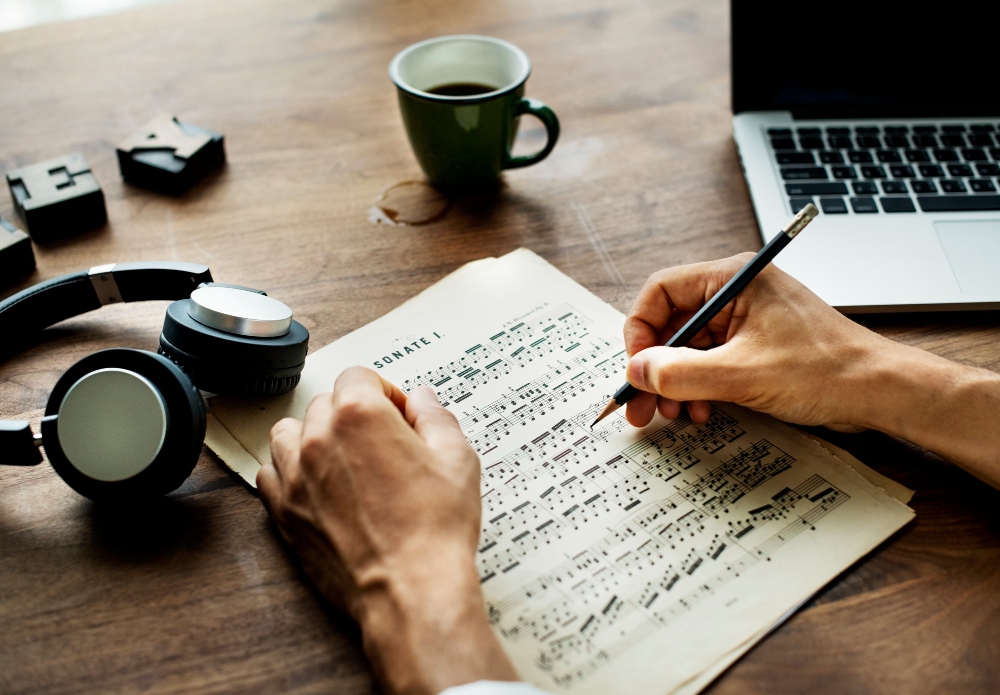
AI transcription for music vs. speech
Music transcription from recordings to music notes exists, but some people may want to turn audio into written words. These are two different kinds of software:
- Music transcription turns audio into music notation using notes on a staff, chords, or tabs.
- Audio-to-text transcription turns audio into written words. This type of software is useful for what people say during a recording session, at a lesson, during rehearsal, or in a meeting.
AI that can transcribe music puts the focus on transcribing notes and rhythm. Audio‑to‑text tools focus on language and preserving meaning.
If you want a piano transcription of a piece you recorded live, you need an AI music transcription tool.
If you want a text transcript of what your teacher explained during that lesson, you need an audio‑to‑text transcription tool like Summary AI.
Musicians can benefit from both types of software depending on the need.
How AI transcribes music
Each AI tool has its own approach, but the basic idea of music transcription AI is similar. You provide audio an audio file as an MP3 or WAV file or paste a link to a song or performance. Them, AI analyzes the recording and detects pitches, timing, and sometimes which instrument is being played. The AI looks at the spectrum of the audio to separate notes and overtones. Finally, the tool gives you an output as music as notation or MIDI. It can show you music notes with the melody and chords, full piano sheet music, or a MIDI file for your DAW so you can edit notes and sounds, or some software gives you guitar tabs, drum notation, or other formats specific to different instruments.
Many of these AI tools started with a focus on piano transcription, then expanded to other instruments and transcribing full songs. Some of them include web apps, plugins for DAWs, or mobile apps.
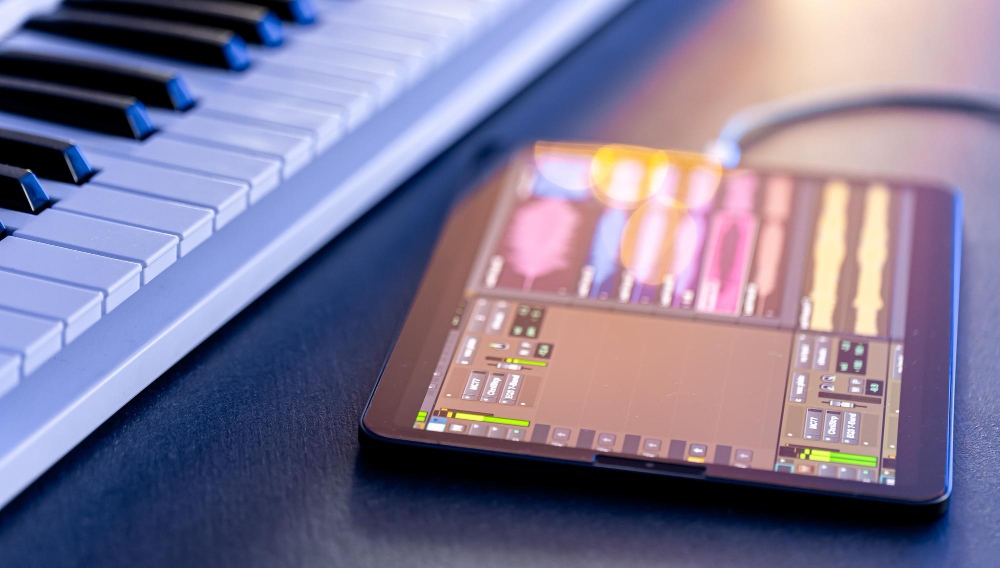
Using AI music transcription
AI that can transcribe music is especially useful when:
- You have a clear recording of a single, solo instrument (e.g. piano or guitar)
- You want to turn a recording of your own performance into piano sheet music or a MIDI file.
- You need a transcription of a simple melody or lead line. (e.g. piano)
- You want a to set the foundation quickly for your sheet music instead of starting from scratch writing every note by hand.
A few examples of people who would use AI that can transcribe music useful include:
- A pianist who wants to record a short improvisation and use an AI music note converter to write down rough piano notes, then clean them up with manual notation.
- A producer who wants to convert a vocal melody into MIDI to the layer a synth track on top of it.
- A student who wants to convert a piece for piano into sheet music so they can practise playing.
In these cases, AI software can save you a lot of time compared to transcribing the music manually on your own note‑by‑note.
Where AI music transcription still struggles
Even the best AI music transcription tools aren’t magic. They have limits:
- Complicated songs: a mix of instruments like drums, bass, piano, guitars, and vocals all at once are hard to separate perfectly, even with AI.
- Polyphonic music: Dense chords and fast passages with intricate voicings can still be confusing for AI.
- Timing and feel: Certain types of music like “rubato” music and swing, and anything with subtle timing can show up as messy rhythms that you will have to fix manually after transcribing it.
- Separating instruments: While some AI tools can guess which notes belong to which instrument, they can still make mistakes, especially in recordings that have a full band playing together.
Because of these limitations, many musicians use AI transcription tools for music notation to make a first draft, not a final score. You still have to review the music notation and correct wrong notes, adjust rhythms. The benefit is that you save time by starting from something instead of starting from scratch.

Where Summary AI fits in
So where does Summary AI come in if we’re talking about AI that can transcribe music?
Summary AI isn’t something you would use to transcribe piano notes or generate sheet music.
Instead, you can use it for audio‑to‑text transcription and summaries. That means you can use Summary AI to:
- Take recordings of lessons, rehearsals, coaching calls, or meetings
- Turn spoken audio into accurate text
- Automatically generate summaries, key points, and action items
For musicians, this is incredibly useful in situations like:
- Lessons: Record your teacher explaining technique or theory while you play. AI music transcription isn’t useful for capturing speech, but Summary AI can transcribe every word and summarize what you need to practise.
- Band rehearsals: When you discuss a set list, arrangements, and assign tasks, an AI music transcription tool won’t help with that conversation, but an audio‑to‑text tool like Summary AI will.
- Studio sessions: Discussions between producers, performers and sound engineers about different takes and ideas can be captured and Summary AI will record those decisions as written notes you can review later.
Music transcription tools capture the music itself and Summary AI captures the discussion around the music, like feedback and creative discussions by turning audio into text and summaries.
Combining AI music transcription and audio‑to‑text
If you regularly record lessons or rehearsals, using Summary AI means you don’t have to rely on your memory or scribbled notes. You can just focus on playing and have a clear record of everything you discussed.

The best workflow can mix both types of software: a tool for AI music transcription for notes that can convert a clean recording into piano sheet music or a MIDI file, and a speech-to-text transcriber like Summary AI for spoken content.
With this workflow, you can record the lesson or rehearsal session where you play and discuss the piece, then generate a summary based on the transciption produced by Summary AI for notes so you always know what to work on next.
Get audio-to-text summaries with Summary AI
AI that can transcribe music is great for turning performances into sheet music, but besides music, almost every project also involves a lot of talking. When you have a lot of meetings, there is a lot of information that can be lost without a tool like Summary AI.
With Summary AI, you can record or upload audio with spoken text and get accurate, word‑for‑word audio‑to‑text transcription. Then, you can instantly generate summaries that highlight everything that was decided during the meeting, so you know what needs work and what to do next.
With Summary AI, you don’t need to dig through recordings anymor. You get clear meeting notes you can skim quickly. For busy people, that’s the difference between forgetting a great idea and actually using it.