





In academic writing, business communication, and content creation, one skill matters more than most people realize: the ability to write an objective summary. Whether you’re a student analyzing a text, a manager reporting on a meeting, or a researcher reviewing data, understanding the objective summary definition and applying it correctly can save time, improve clarity, and eliminate misinterpretation.
This guide breaks down what an objective summary is, how it differs from a subjective summary, why it matters, and how modern tools like Summary AI help generate clean, unbiased summaries instantly.
What Is an Objective Summary? (Definition)
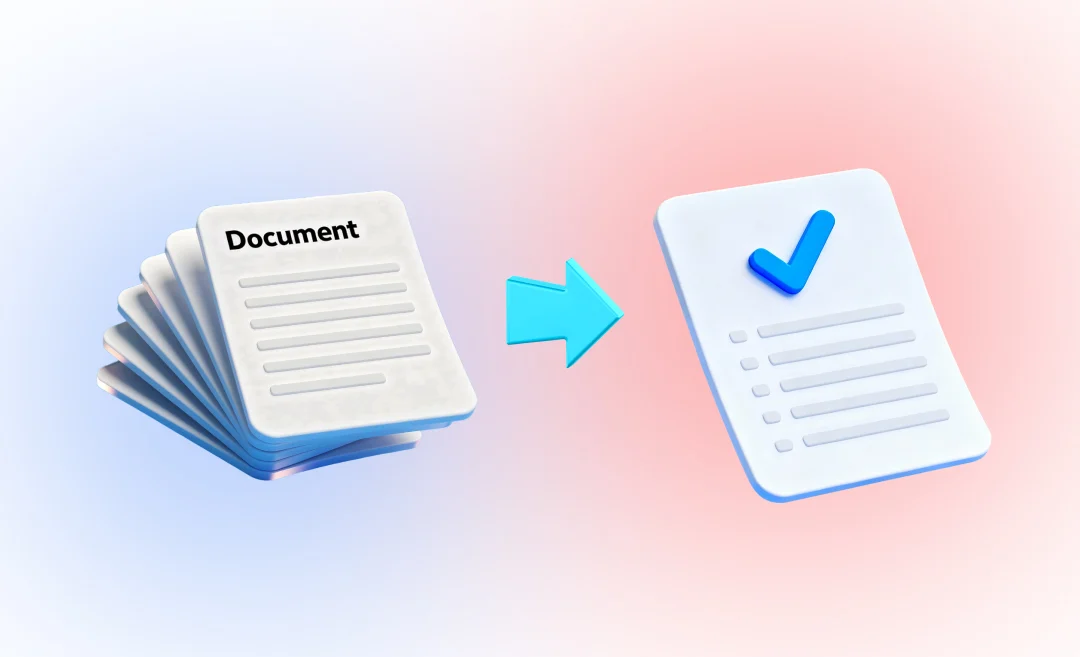
An objective summary is a brief, accurate, and impartial overview of the main ideas in a text, conversation, meeting, video, podcast, or event, without including personal opinions, interpretations, or emotional language.
Objective Summary Definition (SEO-Friendly)

An objective summary is a concise, fact-based explanation of key points from a source, written without bias, judgment, or personal commentary.
In simple terms, it answers:
- What happened?
- What was said?
- What are the main ideas?
Not what you think about it.
Characteristics of an Objective Summary
A strong objective summary should be:
1. Accurate
Reflects the original content without distortion.
2. Neutral
Avoids emotional or opinionated language.
3. Concise
Only reports key points.
4. Fact-based
Uses information directly from the source.
5. Clear & structured
Easy for readers to understand.
Objective vs. Subjective Summary (Comparison Table)
To fully understand the objective summary definition, it helps to compare it with a subjective summary.
| Feature | Objective Summary | Subjective Summary |
|---|---|---|
| Tone | Neutral, unbiased | Personal, emotional |
| Includes opinions? | No | Yes |
| Purpose | Inform | Persuade or reflect |
| Based on facts? | Yes | Partly |
| Language-based | Clear, factual | Descriptive, emotional |
| Example | “The meeting covered budgets and next steps.” | “The meeting was boring and too long.” |
Why Are Objective Summaries Important?
Objective summaries are essential in fields where precision and clarity matter, including:
1. Education
Students summarize chapters, research papers, or lectures to show understanding without injecting opinion.
2. Business
Teams summarize meetings to align everyone on decisions, action items, and next steps.
3. Research & Science
Researchers need unbiased summaries when reporting findings.
4. Media & Journalism
Reporters must present facts accurately.
5. Legal & Compliance
Objective documentation is mandatory for fairness and clarity.
6. AI & Productivity Tools
Apps like Summary AI generate objective summaries automatically to reduce human bias.
Elements of a Strong Objective Summary
A complete objective summary should include:
1. Main idea or topic
What is the content about?
2. Key supporting points
What are the most important elements?
3. Essential facts
What must readers know?
4. No personal opinion
Keep it neutral.
5. No extra details
Avoid unnecessary examples or stories.
How to Write an Objective Summary (Step-By-Step Guide)
Step 1: Identify the main idea
What is the core topic or message?
Step 2: Extract key points
Look for repeated themes, decisions, or concepts.
Step 3: Ignore opinion-based language
Remove adjectives like “boring,” “amazing,” “confusing,” etc.
Step 4: Write in your own neutral words
Do not copy sentences directly unless needed.
Step 5: Keep it short
Usually 3–6 sentences depending on length.
Objective Summary Examples

Example 1: Text Summary
Original: A 40-minute lecture on climate change.
Objective Summary:
“The lecture explained the causes of climate change, its environmental effects, and predictions for future global temperatures. The speaker also presented data on emissions and suggested policy solutions.”
Example 2: Article Summary
Original: A blog post about productivity tips.
Objective Summary:
“The article outlines several productivity strategies, including prioritizing tasks, using digital tools, and limiting distractions. It explains how each method improves efficiency.”
Example 3 — Meeting Summary
Original: A marketing team meeting.
Objective Summary:
“The team reviewed last month’s campaign results, discussed audience insights, and assigned tasks for the upcoming product launch.”
Common Mistakes When Writing Objective Summaries
1. Including personal opinions
“This podcast was really inspiring.”
2. Adding irrelevant details
“He wore a blue shirt while speaking.”
3. Misrepresenting the content
“The author argues that climate change is not a problem.” (when they didn’t)
4. Using subjective adjectives
“Terrible meeting, but we reviewed the new budget.”
How AI Helps Create Objective Summaries Faster
Writing objective summaries manually can be time-consuming.
This is why professionals, students, businesses, and creators use Summary AI.
Summary AI automatically:
- Transcribes audio, video, meetings, and lectures
- Identifies key themes and ideas
- Removes subjective or emotional language
- Generates neutral, structured summaries
- Extracts action items
- Works across languages with live translation
This ensures summaries remain factual and unbiased.
Objective Summary Use Cases (Real-World)
1. Students
Record lectures → Get objective summaries for study guides.
2. Consultants
Capture client calls → Generate unbiased meeting summaries.
3. Journalists
Record interviews → Get clean summaries for fact-checking.
4. Sales teams
Document calls → Avoid memory gaps or emotional interpretation.
5. Podcasters & Video Producers
Transcribe episodes → Get objective summaries for show notes.
6. Executives & Leaders
Review team meetings → Make data-driven decisions.
Objective Summary Tools Compared
| Feature | Manual Notes | Basic Transcription App | Summary AI (Best) |
|---|---|---|---|
| Neutral summary | Depends on the writer | No | Automated |
| Transcription | No | Yes | Yes |
| Key point extraction | No | No | Yes |
| Action items | No | No | Yes |
| Translation | No | No | Yes |
| AI Chat for insights | No | No | Yes |
| Multi-content support (video, audio, PDF) | No | Limited | Yes |
Summary AI clearly offers the most complete solution.
How Summary AI Generates Objective Summaries (Process)
1. Record or upload content
- Meetings
- Videos
- Phone calls
- Podcasts
- Lectures
- PDFs
- Voice memos
2. AI transcribes and analyzes the text
Using advanced NLP, Summary AI identifies keywords, topics, timelines, and patterns.
3. Summary AI removes subjective language
The system filters out emotional phrasing and opinionated terms.
4. The AI generates multiple objective summaries
- Short summary
- Detailed summary
- Key takeaways
- Action items
- Bullet-point highlights
5. You can export or share the summary
In formats like:
- Text
- Notion
- Google Docs
Tips for Writing Better Objective Summaries (If Not Using AI)
1. Stick to the original meaning
Avoid adding assumptions.
2. Start with the main idea
Introduce what the content is about.
3. Focus on facts
Names, dates, decisions, evidence.
4. Keep it short
Avoid repeating information.
5. Use transition words
Such as first, next, finally, overall.
6. Remove emotional adjectives
Replace “exciting story about…” with “The text describes…”
Final Thoughts
Understanding the objective summary definition and learning how to apply it is essential for clear communication in school, work, and everyday life. But instead of spending hours writing summaries manually, modern AI tools make the process faster, more accurate, and more consistent.
Summary AI is the perfect companion for generating objective, unbiased summaries of:
- Meetings
- Lectures
- Videos
- Podcasts
- Phone calls
- Interviews
- Research notes
With transcription, translation, and instant summaries all in one place, it’s never been easier to create clear, objective summaries in seconds.
FAQs About Objective Summaries
1. What is the definition of an objective summary?
An objective summary is a concise, fact-based explanation of key ideas from a text or conversation without personal opinions, emotions, or interpretation.
2. What makes a summary objective?
Neutral language, factual content, accuracy, and the absence of emotional or opinion-based statements.
3. How long should an objective summary be?
Usually 3–6 sentences, depending on the length of the original material.
4. How does Summary AI create objective summaries?
It uses AI to transcribe content, extract key points, and generate unbiased summaries by filtering out subjective language.
5. What is the difference between objective and subjective summaries?
Objective summaries report facts neutrally; subjective summaries include personal opinions, emotions, or reactions.