





In our digital world, one question keeps coming up: how can we type fast? Whether you’re writing emails, drafting documents, or taking notes on the fly in meetings, faster typing often means higher productivity.
But what if “typing fast” didn’t always mean your fingers flying over the keys? What if it meant capturing spoken ideas and instantly converting them into text? That’s where an AI-powered app like Summary AI changes the game.
1. The traditional approach: get better at typing
Let’s start with what we know works for conventional typing improvement:
- Focus on touch typing (typing without looking at the keyboard). This builds muscle memory and helps you move from the hunt-and-peck method to fluid typing.
- Prioritize accuracy before speed—getting the words right matters more than pounding them out.
- Set aside short daily practice sessions (10-20 minutes) instead of one long marathon. Consistency wins.
- Use an ergonomic setup—good posture, comfortable keyboard, minimal distractions. These reduce fatigue and errors.
All great advice if you’re physically typing. But what if you don’t have to type as much? What if the faster way is not your fingers, but your voice?
2. A new paradigm: speak, transcribe, and text

Here’s where Summary AI steps in. Instead of just teaching you to type faster, it provides an alternate route: recording spoken words and converting them into ready-to-use text instantly.
With this approach you get the benefits of expression (speaking) and the output of typed text—no typing required.
Why this matters:
- Many people think faster means better typing speed. But speed is only part of the equation. What really adds value is not having to type at all.
- In meetings, lectures, brainstorming sessions—or anytime you’re capturing ideas—you’re often listening or speaking, not typing. Summary AI allows you to stay engaged and focused while the transcription happens in the background.
- Once the voice is converted to text, you get searchable transcripts, summaries, and text you can paste into a document, share, edit—no manual transcription required.
By shifting from “how can I type fast” to “how can I convert what I say into text instantly,” you leapfrog traditional typing constraints.
3. How to leverage this for maximum benefit
To make the most of this new approach, here are steps you can follow, especially if you use Summary AI:
- Record your voice or meeting: hit record, speak naturally.
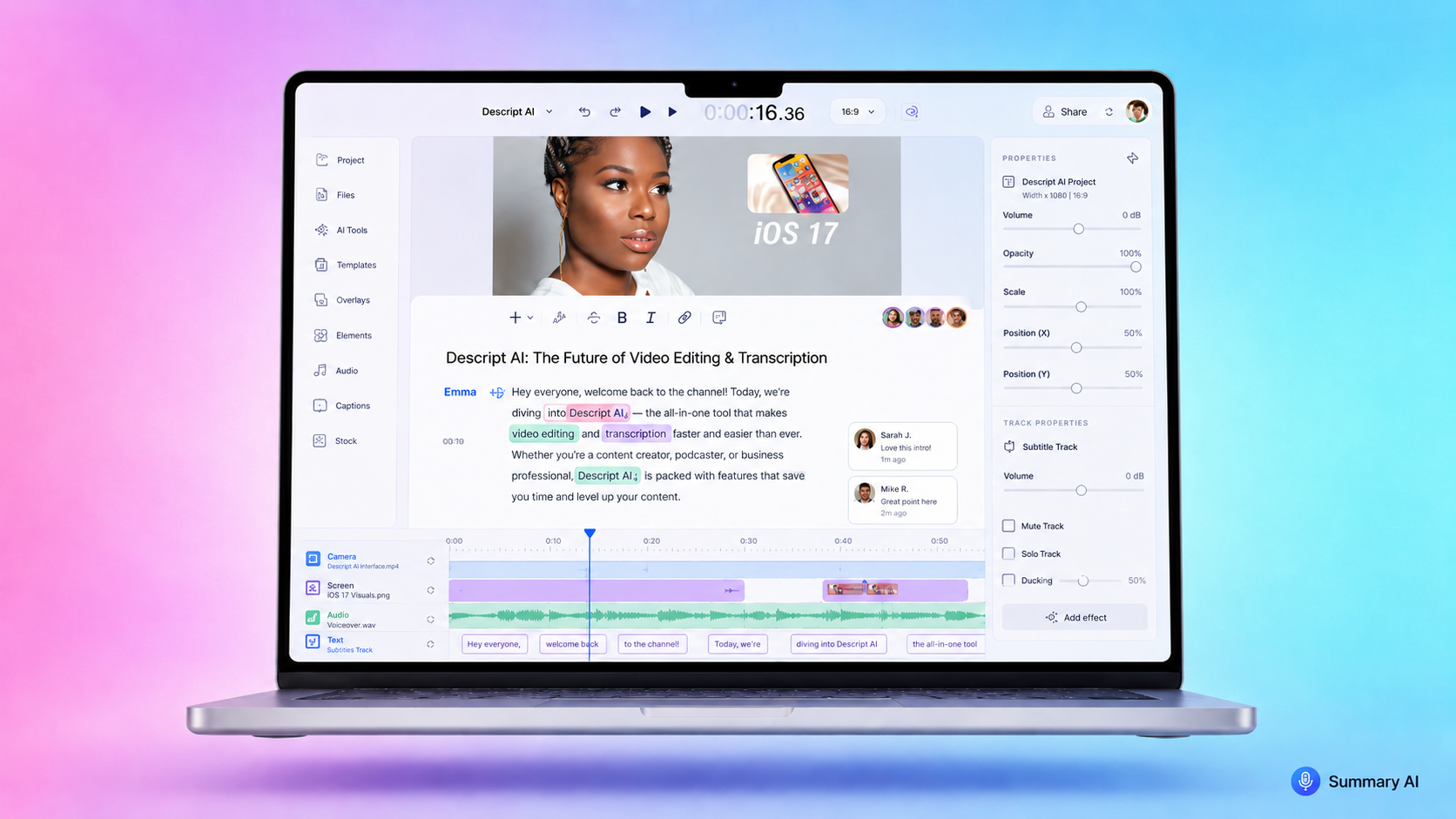
- Let the app transcribe and format: it turns audio into clean text—speaker-labeled, punctuated, ready to go.
- Edit and export: you can refine the text, apply summaries, or paste into places like Microsoft Word or Evernote for further work.
- Use the transcript smartly: you can search it, highlight action items, or even ask AI for key points.
This workflow lets you bypass the old “type fast” mindset—and instead focus on what you’re saying and thinking.
4. Real-world productivity gains
Here are the specific wins you can expect:
- Time saved: Instead of spending 15-30 minutes typing notes after a meeting, you get a full transcript and summary within minutes.
- Higher engagement: You stay present during conversations instead of splitting your attention between typing and listening.
- Better capture of ideas: Spoken ideas flow freely; you don’t lose them to slow typing.
- Reusable text: The transcript becomes content—paste into documents, repurpose into blogs, share instantly.
- Searchability: Unlike handwritten or typed notes, a digital transcript means you can search, jump to specific moments, and find details fast.
5. Where should you focus (and still improve typing)?

Even with AI tools, being able to type when needed is still useful. So don’t abandon typing altogether. Here’s how you can strike the balance:
- Keep your foundation: learn home-row positioning, finger placement, and the mechanics of efficient typing.
- Build touch‐typing routines: though you’ll rely less on them for raw output, they’ll help when you do need to type—comments, edits, quick emails.
- Practice keyboard shortcuts: These amplify efficiency—cut/paste, delete word, move cursor by word. Good shortcuts shave seconds.
- Use the AI tool for heavy lifting: Whenever you have a larger typing task (transcribing meetings, notes, content creation), lean on Summary AI to convert voice into text.
- Still monitor accuracy: Whether typing manually or editing transcripts, accuracy matters more than speed. Less correction time = true speed.
6. Implementation plan: step by step
Here’s a concrete plan you can follow to implement this hybrid approach of speaking + AI + typing:
- Week 1 – Focus on touch typing fundamentals for 10-15 minutes daily. Use typing-test tools to get baseline WPM.
- Week 2 – Start using Summary AI in a real setting (a 30-minute meeting or voice memo). Record, let it transcribe, then review the output.
- Week 3 – Mix both: continue 5-10 minutes of typing practice daily and use Summary AI for one longer session (meeting/lecture).
- Week 4 – Use the transcripts: export to Word or Evernote, edit, reuse the text for emails or documents. See how much time you save.
- Ongoing – Track metrics: measure your manual typing speed (WPM), compare time spent typing vs time spent using voice+transcription. Adjust focus accordingly.
7. Common pitfalls & how to avoid them
- Thinking you’ll only type and ignore voice recording: Many people overestimate how fast they can type and lose flexibility.
- Ignoring accuracy: Mistakes force corrections, which kills productivity. Always aim for high accuracy before speed.
- Poor environment: Distractions, bad posture, noisy rooms reduce both typing and recording quality.
- Reliance without review: AI transcription is powerful but not perfect. Always review key output—especially names, technical terms.
- Overlooking export & reuse: A transcript is only valuable if you use it. Export, search, edit. Make it work for you.
8. Why Summary AI stands out
Here’s how Summary AI supports this new model of productivity:
- It records anywhere—meetings, lectures, voice memos—and converts audio to text seamlessly.
- It supports editing, exporting, and searching transcripts so your text becomes usable content—no extra typing required.
- It frees you to be present during conversations, which means you can focus on ideas, not on trying to type fast.
- It delivers speed gains not by making your fingers faster, but by reducing the need to type entirely in many scenarios.
Final thoughts
So when you ask “how can we type fast?”, the answer in 2025 is evolving.
Yes, developing typing skill remains valuable—but the real leap is in using voice, AI transcription, and smart workflows to convert what you say into text automatically. This doesn’t just make you faster; it changes how you produce text.
If you’re tired of hammering keys, fighting errors, and spending hours typing what you already said—give the voice-to-text workflow a try. Speak your ideas, let AI do the writing, edit as needed, and reclaim time for high-value work.
With Summary AI, you don’t just type fast—you think fast and let the app transform your words into text.
Try it today: Record your next meeting or voice memo, see how the transcript appears in minutes, export to Word, edit, share—experience a new kind of typing fast.