





Are your notes actually useful or do they always end up being an indecipherable, jumbled mess? Whether you are a project manager, team lead, or just a regular person who was asked to take notes at a meeting, this article is for you. We’ll take a good look at how to take better notes. The methods we will examine include well-known notetaking methods like the Cornell method, but also some lesser-known ways of notation that you might find interesting.
Taking notes effectively is not about writing down every word during a meeting. Instead, it is about keeping track of the main points of a meeting, recording information that needs to be kept track of in order to keep a project on track, a business afloat, or a partner to their word.
Whether you prefer pen and paper, digital note taking tools, or detailed templates, it doesn’t matter too much. What really matters is that you want to learn how to take good notes, and for that, we need to examine your approach. We need to learn to create effective meeting notes that help you stay organized and make your notes actionable. In this guide, you’ll learn note taking methods for meetings, how to create good meeting notes, and techniques for how to take notes faster without missing critical points. So without further ado, let’s jump in.

Meeting notes are important–here’s why
Meeting notes are far more than just a record of everything that happened in a meeting. Meeting notes serve as a reference for a myriad of decisions, task, next steps, and more. Without proper notes, how will you remember what was discussed? Furthermore, without proper notes, how will you know what the next steps are? If you don’t take notes during a meeting, you forget what you are supposed to do, get lost in the details without seeing the bigger picture, and miss deadlines. Accountability also suffers if no one remembers who is supposed to do what. But if you take notes, you don’t have to keep all of this in your mind, because it is all written down. Isn’t that great?
Focus on creating action items
So, a person who takes notes is not just acting as scribe, recording information for the sake of it. They are actually creating a tool that will help everyone stay aligned. Notes help everyone stay on the same page, so to speak. They help us create action items, which are then easier to follow through on. These all lead to clearer communication, something that works wonders for any group of people, especially people working together.
That’s why notetaking is so important for business professionals especially. Notes help absent employees catch up on what was discussed quickly and they help managers track progress on shared projects.
A new way to take notes
Before we get really deep into note taking methods, we need to mention that the really cool things is that nowadays, you can free up the person who usually takes notes during a meeting and use an AI meeting assistant instead. Summary AI has a particularly well-designed meeting assitant you can use for note taking during meetings. This assistant is basically a tool that integrates with most digital meeting platforms and joins any meeting you want it to. It then takes notes during the meeting, creating a transcription of everything that was said. Finally, Summary AI creates an AI summary of the transcription so you can save even more time. Anyone who missed the meeting and wants to get up to date can simply read the summary complete with action items and key points.
In the next section, we will get back to our real topic and look at how to structure meeting notes and a few note taking tips for meetings, as well as what the person who takes notes should prioritize and what structure they should follow when taking notes in a meeting.
What should you include for better meeting notes?
One way of looking at this question is that you should include everything that you think is important, simple as that. However, what if what you think is important based on your perspective of the issue or because of your professional bias in the situation (at a work meeting for example)?
On the other hand, you do need to learn to only take note of what is actually useful. Effective meeting notes are more than a collection of everything that was said. The best notes focus on information that will help the team stay organized and focused on what the meeting is about.

So good note taking is a balance of knowing what to include and what to leave out.
However, a few things are important to include if you want to stay organized.
Meeting Title
Each set of notes should start with the title of the meeting. Next to or under it, you should write the date and time, and an optional list of the participants or the name of the team or meeting.
For example, you might write:
“Marketing meeting
- Date: Feb 25, 2026
- Time: 12:00 pm
- Participants: Video team
- Absent: John M.”
This does two things. First, it makes it easier to find notes later. Secodn, it helps everyone know which discussion the notes belong to and who it regards.
Topics and Key Points
When taking notes during a meeting, a general best practice is to record the main topics and key points.
Focus on what decisions are made, important ideas expressed during the meeting, and discussion points that are relevant to the topic.
You can’t write everything word-for-word, of course. That would be exhausting. However, you can summarize what matters most while staying as accurate as possible.
Use general keywords. Everyone who knows the topic will have a basic understanding of what is what.
Bullet points or headings and subheadings are useful for keeping your meeting notes organized and easy to read.
Action Items
Action items will be one of the most important parts your notes. These are a list of tasks agreed on during the meeting. It is basically how you will follow up what was discussed. It can be helpful to list these action items in a separate column or past the margin of the paper (if taking notes manually) so they are visible.
For each task that you list, you should include:
- What needs to be done
- Who is responsible
- Deadline or due date
Highlight the action items clearly and ask for input from the team to define them well. Listing action items gives the team an actual plan to follow after the meeting. Action items ensure accountability. They give you something to follow up on. A list of to-do’s helps turn discussions into plans that bring results.
Next, we will take a look at some popular methods for taking effective notes.
8 note taking methods for good meeting notes
Now that you know what your notes should include and why they are important, we’ll take a look at a few of the best ways to take notes. These methods are well-known, and you may have heard of them, but do you actually know how, why, and when to use them? Read on to learn more!
1. Take notes with the Cornell method
For this method of note taking named after the university, split your page into three sections.
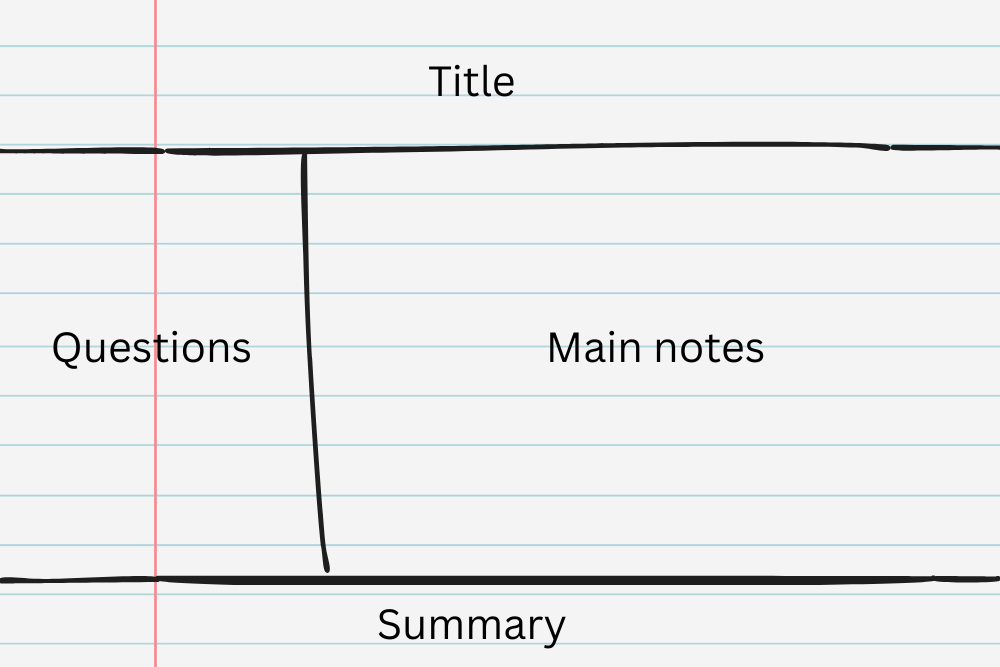
The Cornell method splits your page into three sections: notes, keywords or questions, and a summary.
How to use it:
- Write your main points and notes in the largest section.
- Use the section near the margin to list key terms, questions, or decisions taken.
- At the bottom: Summarize the meeting briefly.
The Cornell method is quite versatile. It’s particularly useful for meetings where you need to organize ideas clearly and review them later. It helps create good meeting notes that are easy to share, review, and follow up on.
2. Outline method for meeting notes
For the outline method, you organize your notes with headings, subheadings, and bullet points.
How to use it:
Using it is pretty straightforward. You write the main topics as headings and list supporting points, decisions, and action items under each heading.
The outline method is best for discussion where the structure is pre-existing and the discussion goes step-by-step. This makes it quite useful for taking notes at school or trainings.
3. Writing meeting notes with a mind map
Mind mapping is a great way to show relationships between ideas visually. This method is great for brainstorming sessions because it helps you make connections between ideas. It helps with taking notes during a meeting when ideas come quickly and need to be linked in some way.
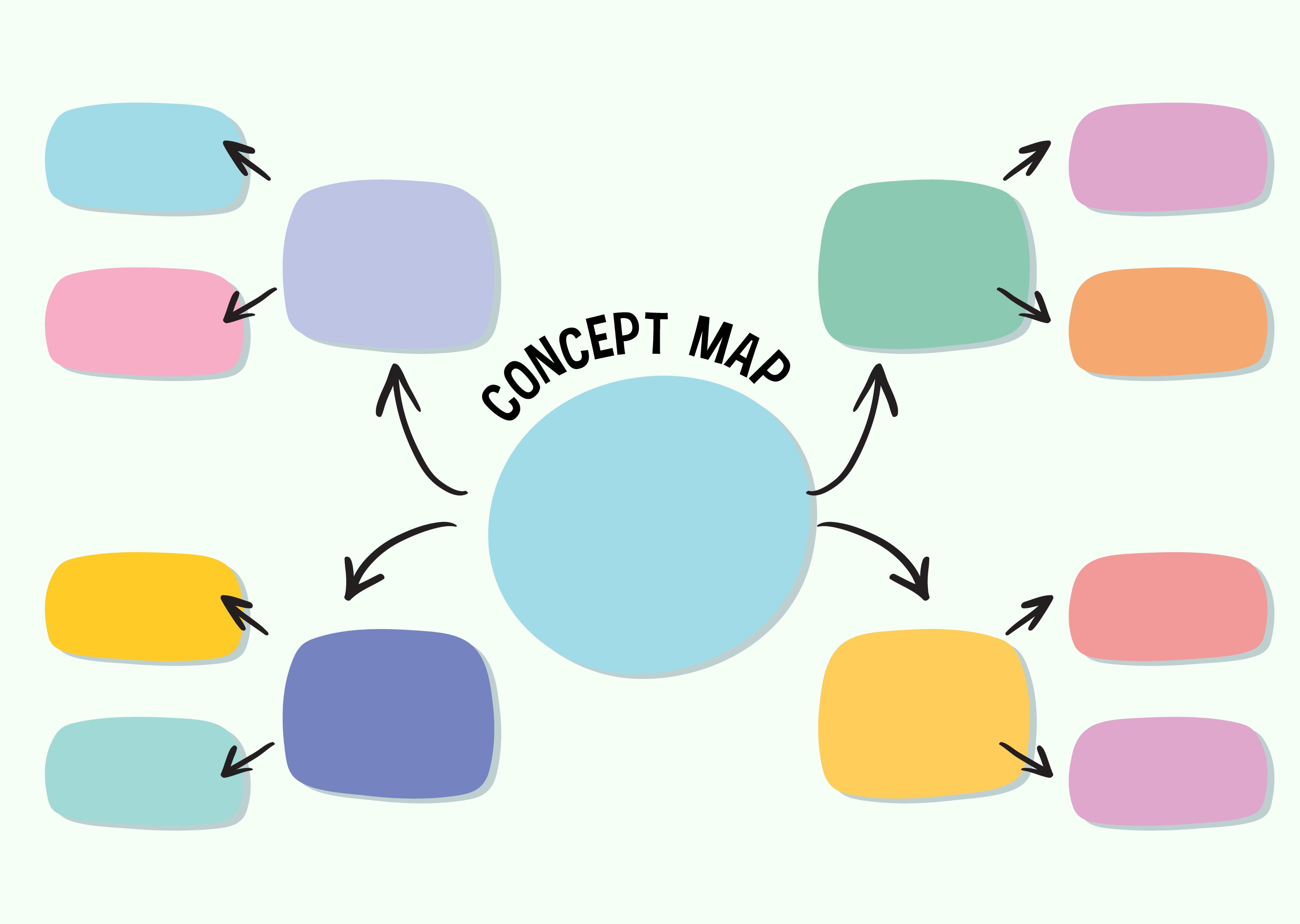
You start a mind map by drawing a shape in the center and adding the main topic as a label. Then you draw branches for subtopics or decisions. Add smaller branches for action items, notes, or questions.
Mind maps can help capture information visually, mkaing it easier to review.
4. Using the charting method for notes
For the Charting method you use tables to organize information.
How to use it:
- Create columns for topics, decisions, action items, and task owners.
- Fill in the rows as the meeting goes on.
The charting method is best for project updates where you need to track multiple categories, keeping your notes very clear and structured.
5. Sentence method for writing notes
The Sentence method is very specific and may not be everyone’s cup of tea. This technique involves writing each point as a full sentence.
How to use it:
- Start a new sentence for each idea, decision, or task.
- You can later organize or summarize these sentences to give more context.
This method is best in situations where wording is important or you want to capture how someone felt or phrased something.
6. Flow
Flow-based note taking is very flexible and intuitive. You write and connects ideas naturally as they arise.
How to use it:
- Write down points as they happen.
- Use arrows or lines to link related points or tasks.
This is best for brainstorming or informal discussions, as well as meetings that are not structured at all. This is a good method for note taking that you should try when you need to take notes faster without losing context.
7. How to take notes with the quadrant method
Divide your page into four sections: notes, questions, personal tasks, and team tasks.
How to use it:
Use the quadrants simultaneously and fill in them in gradually during the meeting.
- Fill in general notes in one section.
- List questions in another.
- List personal tasks
- List team tasks
This is a good way to take notes when you need to track decisions, responsibilities, and follow-ups. Some of the best meeting notes comoe from this technique.
Get perfect meeting notes every time with Summary AI
Taking meeting notes is essential for keeping things organized and keeping your team on track.
Using the right note taking methods for meetings helps you keep on track, make decisions, know what to do and what to follow up on. Whatever your approach, good notes save time and prevent misunderstandings.
Tools like Summary AI can create fantastic meeting notes for you automatically. It joins your Zoom, Google Meet, or Microsoft Teams calls, records every word, and the AI meeting assistant creates AI summaries with tasks and decisions that you can share with the participants.